


Tin Swe Thant is best known as the mother of American journalist, author, and television host Alex Wagner, but her own life tells a remarkable story of immigration, education, cultural identity, and family. Born in Yangon, Burma, formerly known as Rangoon, Tin Swe Thant eventually moved to the United States and became a naturalized American citizen. Her experiences growing up during the final years of British colonial influence in Burma later became an important part of the family history explored by her daughter. Unlike Alex Wagner, Tin Swe Thant has largely avoided public attention. As a result, many details about her private life remain undocumented. What is known, however, provides a fascinating portrait of a Burmese immigrant whose experiences helped shape the next generation of her family.
Tin Swe Thant Biography at a Glance
Information about Tin Swe Thant comes primarily from biographical accounts of Alex Wagner, interviews, and discussions surrounding Wagner’s memoir Futureface. Because Tin has maintained a private life, some commonly published details are estimates rather than confirmed records. Her exact birth date, for example, is not reliably established in authoritative public sources. What is well documented is that she immigrated from Yangon, Myanmar, became a naturalized U.S. citizen, studied at Swarthmore College, and later became the mother of Alex Wagner. Her life also intersects with the career of her former husband, Carl Wagner, a prominent Democratic political consultant. The following summary focuses on information that can reasonably be supported while identifying areas where the public record remains incomplete.
| Biography Detail | Information |
|---|---|
| Full Name | Tin Swe Thant |
| Known For | Mother of Alex Wagner |
| Birthplace | Yangon (Rangoon), Burma, now Myanmar |
| Nationality | Burmese-American / naturalized U.S. citizen |
| Childhood School Name | Maureen Thant Gyi |
| Education | Swarthmore College |
| Field of Study | Political Science |
| Former Husband | Carl Wagner |
| Daughter | Alex Wagner |
| Public Profile | Predominantly private |
| Exact Birth Date | Not reliably confirmed publicly |
| Net Worth | Not publicly disclosed |
Early Life in Yangon, Burma
Tin Swe Thant grew up in Yangon during a period of enormous political and social change. The city, then commonly called Rangoon, was part of Burma under British colonial rule before the country gained independence in 1948. Growing up during this transition meant that Tin experienced a society where Burmese traditions existed alongside institutions and customs influenced by Britain. Her childhood is particularly significant because of the way colonial-era education affected her personal identity. According to accounts connected with her daughter’s writings, her school required her to use a Western name rather than her Burmese given name. This seemingly small incident became a powerful family story about identity and assimilation. Decades later, that experience would help Alex Wagner understand the complicated relationship between heritage, belonging, and American identity.
The Story Behind the Name “Maureen”
One of the most frequently discussed details in the biography of Tin Swe Thant is her childhood experience with the name Maureen. When her father took her to enroll in an English-language school, he was reportedly told that she needed a Western name. Her father apparently had to think quickly and selected Maureen, reportedly inspired by Irish-American actress Maureen O’Hara. Tin consequently became known at school as Maureen Thant Gyi, even though Tin Swe remained her Burmese identity. The story is more than an unusual childhood anecdote. For Alex Wagner, it represented an example of how cultural identity could be diminished by institutions that treated Western identity as the default. Wagner later reflected on the experience as part of her broader exploration of race, immigration, ancestry, and belonging.
Why Her Burmese Name Matters
The importance of Tin Swe Thant’s name extends beyond the question of what she was called at school. Names can carry family history, language, cultural heritage, and a sense of belonging. In Tin’s case, the contrast between her Burmese name and her imposed Western school name became a symbol of the tension between maintaining cultural identity and adapting to institutional expectations. When she eventually moved to the United States, she was able to attend college using her own name. That transition has particular meaning because it represented a different relationship with identity: she could enter an American educational environment without surrendering the name she had been given by her family. Her experience later became an important element of Alex Wagner’s understanding of multicultural identity. It also demonstrates why Tin Swe Thant’s personal story remains relevant despite her preference for privacy.
Moving From Burma to the United States
During the 1960s, Tin Swe Thant moved from Burma to the United States, beginning a new chapter in her life. Immigration involved much more than simply changing countries. She was leaving behind her familiar environment, family connections, language, and cultural surroundings while entering an American society that was itself undergoing major social and political changes. According to biographical accounts, Tin became a naturalized U.S. citizen before attending Swarthmore College. Her journey reflects the experience of immigrants who carry one cultural identity into another society and gradually create a life that incorporates elements of both. Rather than abandoning her Burmese background, Tin appears to have maintained it as an important part of her family life. Her eventual influence on Alex demonstrates how immigrant parents can transmit cultural memory across generations.
Education at Swarthmore College
Education became an important part of Tin Swe Thant’s American journey. She attended Swarthmore College in Pennsylvania, where she studied political science. Swarthmore is known for its academically rigorous liberal arts environment, and political science would have provided Tin with an opportunity to study government, institutions, political systems, and the forces that shape societies. Her educational path is particularly interesting when considered alongside her childhood experiences in Burma. She had personally witnessed how institutions could influence something as fundamental as a person’s name and identity. Studying political science therefore placed her within an academic discipline concerned with power and society. Although there is limited public information about her professional life after college, her education remains one of the better-documented aspects of her biography and an important part of her story.
Tin Swe Thant and Carl Wagner
After moving to the United States, Tin Swe Thant became connected to Carl Wagner, an American political consultant who later became a prominent Democratic Party strategist. Carl Wagner was born in Iowa and developed a significant career in American politics, including his involvement with Bill Clinton’s 1992 presidential campaign. The relationship brought together two very different family backgrounds: Tin’s Burmese heritage and Carl’s American roots. Their family life eventually centered in Washington, D.C., where political discussions and multicultural experiences formed part of their household environment. Their marriage also connected Tin indirectly to American political history through Carl’s career. While Carl became a recognizable name in Democratic political circles, Tin generally remained outside the spotlight. Their family story therefore illustrates how public political life and private family life can exist alongside one another.
Her Daughter Alex Wagner

The most significant public connection in Tin Swe Thant’s life is undoubtedly her daughter, Alex Wagner. Born and raised in Washington, D.C., Alex became a prominent journalist, author, political commentator, and television host. Her multicultural upbringing gave her a distinctive perspective on questions involving identity, race, immigration, and belonging. Alex has repeatedly discussed her parents’ backgrounds and the ways they influenced her understanding of America. Tin’s Burmese heritage was particularly important because it gave Alex a connection to a culture that was different from her father’s European-American background. As Alex developed her career, the story of her mother’s immigration and childhood became more than a family anecdote. It became part of the intellectual and personal foundation behind Alex’s exploration of ancestry and identity.
Tin Swe Thant’s Influence on Alex Wagner
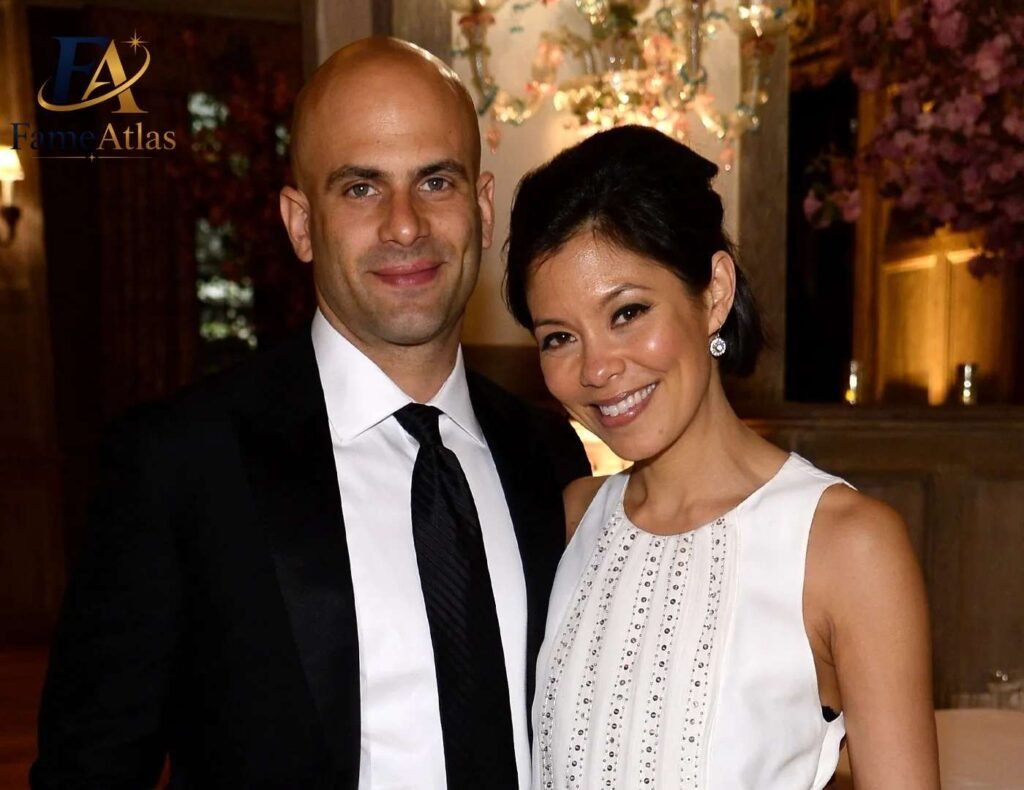
Although Tin Swe Thant has not built a public career of her own, her influence on Alex Wagner is one of the clearest reasons people continue to search for her biography. Alex’s work has frequently touched on cultural identity, politics, immigration, race, and the meaning of belonging. These subjects are closely connected to the experiences Alex learned about through her mother. Growing up with a Burmese immigrant mother meant that Alex encountered questions about heritage from an early age. Her mother’s childhood name story, immigration experience, and cultural background offered Alex a personal connection to larger discussions about assimilation. This influence became especially visible when Alex began examining her family history more deeply. In that sense, Tin Swe Thant’s impact is not measured by public appearances but by the ideas and cultural awareness she passed to her daughter.
Futureface and Her Family Story
One of the most important places to understand Tin Swe Thant’s influence is Alex Wagner’s 2018 book, Futureface: A Family Mystery, an Epic Quest, and the Secret to Belonging. The book examines Wagner’s ancestry and her search for a deeper understanding of where she came from. Her mother’s Burmese background is an essential part of that exploration. The story of Tin’s childhood, including the pressure to adopt a Western school name, provides a personal example of the larger questions that the book considers. Rather than treating ancestry as a simple list of nationalities, Wagner explores what heritage means emotionally and socially. Tin Swe Thant’s life therefore becomes part of a much broader discussion about migration, identity, family memory, and the ways historical experiences can influence children and grandchildren.
A Burmese-American Family Identity
The family created by Tin Swe Thant and Carl Wagner represented a blend of cultural traditions. Their daughter grew up with Burmese heritage through her mother and European-American ancestry through her father. This multicultural environment became part of Alex Wagner’s personal identity and eventually influenced her professional interests. Tin’s Burmese background was not simply a historical detail; it was part of the family’s living culture. Her experiences offered Alex access to stories and traditions that might otherwise have disappeared across generations. Maintaining cultural identity within an immigrant family can involve food, language, names, stories, family relationships, and memories of the country left behind. Tin’s story demonstrates how these elements can survive even after migration and can become increasingly meaningful to later generations as they seek to understand their roots.
Tin Swe Thant as a Mother

Beyond immigration and education, Tin Swe Thant’s most important role was as a mother. She raised Alex Wagner in Washington, D.C., alongside Carl Wagner, giving her daughter an upbringing shaped by both Burmese and American experiences. Alex’s later career demonstrates the importance of asking questions about identity, society, and belonging, subjects that were deeply connected to her family background. While public sources do not provide an exhaustive account of Tin’s parenting style or daily family life, the continued importance of her story to Alex suggests that her cultural background remained meaningful within the household. Tin’s influence can therefore be understood less through public statements and more through the legacy visible in her daughter’s work. Her experience as an immigrant became part of the intellectual and emotional history that Alex carried into adulthood.
Her Connection to American Political Life
Through her marriage to Carl Wagner, Tin Swe Thant was also connected to the world of American politics. Carl became a respected Democratic political consultant and was involved in major political campaigns, including Bill Clinton’s 1992 presidential campaign. Tin herself should not be described as a political strategist or public political figure, because there is insufficient evidence to support such a characterization. Her significance lies instead in the environment surrounding her family. Alex grew up in Washington, D.C., while her father worked in national politics and her mother brought a distinct immigrant and international perspective into the household. This combination gave Alex exposure to political conversations and cultural questions from an early age. It helped create an unusual family environment in which American politics and Burmese heritage existed side by side.
The Passing of Carl Wagner
Carl Wagner died in 2017 at the age of 72, marking a significant loss for the Wagner family. His death was also noted within American political circles because of his long career as a Democratic strategist and consultant. For Tin Swe Thant, Carl’s death represented the loss of her former husband and the father of her daughter. Because Tin has remained private, there is limited reliable public information about how she personally experienced the loss. It is therefore inappropriate to speculate about her private emotions or later personal circumstances. What can be established is that Carl remained an important part of the family history that connects Tin and Alex. His political career also provides context for the environment in which Alex grew up and eventually developed her own career in journalism and political commentary.
Tin Swe Thant’s Cultural Legacy
The cultural legacy of Tin Swe Thant can be seen most clearly through the next generation. Her Burmese background became part of Alex Wagner’s identity and her exploration of ancestry. Even the naming traditions within Alex’s family have been discussed as part of the effort to preserve connections to Burmese heritage. This kind of cultural transmission is significant because immigrant families often face the challenge of maintaining traditions while adapting to a new country. Tin’s journey demonstrates that migration does not necessarily mean abandoning the culture of one’s birthplace. Instead, cultural identity can evolve and become part of a broader family story. Through Alex’s writing and public discussions, elements of Tin’s Burmese heritage have reached audiences far beyond the family itself, giving a private immigrant story a wider cultural significance.
What Is Known About Tin Swe Thant’s Career?
There is limited reliable public information about Tin Swe Thant’s professional career. Some websites describe her as an educator or community advocate, but those descriptions are not supported by the same level of evidence available for her education and family relationships. It is therefore better not to assign her a specific occupation without a stronger source. What can be established is that she studied political science at Swarthmore College after becoming a naturalized American citizen. Her educational background indicates a strong interest in society and political systems, but education alone does not establish a particular profession. This distinction matters because many online celebrity biographies repeat one another and can turn uncertain claims into apparently established facts. For a trustworthy biography, the safest approach is to acknowledge the limits of the public record.
Tin Swe Thant’s Age and Birth Information
The exact age and birth date of Tin Swe Thant are not reliably documented in authoritative public sources. Several recent biography websites estimate that she was born around 1945 or 1946, which would place her around 80 years old in 2026. However, these estimates appear to be based on biographical timelines rather than a publicly verified birth certificate or authoritative biography. For that reason, an exact age should not be presented as established fact. Her birthplace, Yangon, Burma, is much more consistently reported. The distinction between confirmed and estimated information is particularly important when writing about a private person. Rather than inventing precision, it is more accurate to state that Tin belongs to a generation of Burmese immigrants who came to the United States during the transformative decades of the 1960s and 1970s.
Tin Swe Thant’s Net Worth
There is no reliable public estimate of Tin Swe Thant’s net worth. Unlike celebrities and business executives whose earnings, property holdings, or professional contracts may receive extensive coverage, Tin has maintained a private life and does not have a publicly documented financial profile. Some websites may publish numerical net-worth estimates, but those figures generally lack evidence and should not be treated as factual. Her education, marriage to a successful political consultant, and connection to a prominent journalist do not provide enough information to calculate personal wealth. A responsible biography should therefore list her net worth as undisclosed or unknown. Avoiding unsupported financial numbers is especially important because online estimates are frequently copied between websites without independent verification. At present, there is no authoritative public source establishing Tin Swe Thant’s personal wealth.
Where Is Tin Swe Thant Now?
The current private life of Tin Swe Thant is not extensively documented. Recent online biographies claim that she lives in the New York area and remains close to her family, but those details are not supported strongly enough to present a precise current residence as confirmed fact. What is clear is that she has continued to live largely outside the public spotlight while her daughter has developed a high-profile career. This privacy appears to be an important characteristic of Tin’s life. She has not sought the celebrity status associated with her daughter, nor has she built a large public media presence. For readers researching Tin Swe Thant, the most accurate description of her present life is therefore that she remains a private Burmese-American family figure whose public relevance comes primarily from her influence on Alex Wagner and her place in the Wagner family story.
Why Tin Swe Thant’s Story Matters
The story of Tin Swe Thant matters because it illustrates how an individual life can connect several major themes: migration, education, cultural identity, assimilation, family, and belonging. Her journey from Yangon to the United States was not simply a geographic move. It involved adapting to a new society while preserving a cultural identity that had already been challenged during childhood. Her experience with the name “Maureen” demonstrates how institutions can influence the way people present themselves, while her later life shows how identity can be reclaimed and passed forward. Through Alex Wagner’s work, these experiences have reached a much wider audience. Tin may not have sought public recognition, but her life has nevertheless contributed to an important conversation about what it means to belong to more than one cultural world.
Tin Swe Thant’s Lasting Legacy
The lasting legacy of Tin Swe Thant is found less in fame than in family. Her daughter, Alex Wagner, became a nationally recognized journalist and author whose work frequently examines politics, culture, identity, and belonging. Many of those themes resonate strongly with the experiences of Tin’s own life. From childhood in Burma to immigration and higher education in America, Tin experienced the challenges of adapting without completely surrendering her cultural identity. Her story became part of the foundation from which Alex explored her own ancestry and multicultural background. In that sense, Tin’s influence extends beyond her immediate family. Her experiences offer a small but meaningful example of the immigrant stories that have helped shape modern America. Her legacy is therefore one of cultural continuity, education, resilience, and the quiet influence a parent can have on a child’s understanding of the world.
Conclusion
Tin Swe Thant is much more than a name appearing in the biography of Alex Wagner. She is a Burmese-American immigrant whose journey reflects the complicated relationship between heritage and assimilation. From growing up in Yangon, Burma, to experiencing the pressure to adopt the Western school name “Maureen,” and later moving to America and studying political science at Swarthmore College, her life contains several remarkable chapters. Her marriage to political strategist Carl Wagner and the upbringing of their daughter Alex placed her within a family shaped by both American politics and Burmese heritage. Although many details about Tin remain private or unverified, the information that is available tells a meaningful story of identity, education, migration, and family. Her quiet influence continues through Alex Wagner and the cultural legacy passed to later generations.
FAQs About Tin Swe Thant
Who is Tin Swe Thant?
Tin Swe Thant is a Burmese-American woman best known publicly as the mother of journalist and television host Alex Wagner. She was born in Yangon, Burma, immigrated to the United States, became a naturalized American citizen, and studied political science at Swarthmore College. She has largely remained a private person rather than a public celebrity. Her story became more widely known through Alex Wagner’s writing and discussions about ancestry, identity, and belonging. Tin’s experiences growing up in Burma and later moving to America helped shape the multicultural family environment in which Alex was raised.
Where was Tin Swe Thant born?
Tin Swe Thant was born in Yangon, which was known internationally as Rangoon during much of her childhood. At the time of her early life, the country was known as Burma. Burma gained independence from Britain in 1948, creating a major historical transition during Tin’s formative years. Her childhood in Yangon is particularly significant because she experienced the lingering influence of British-style institutions and education. Her school’s requirement that she use a Western name became an important part of the family story later explored by her daughter, Alex Wagner.
Why was Tin Swe Thant called Maureen?
According to accounts of her family history, Tin Swe Thant was given the school name “Maureen” because the school required students to have Western or English names. Her father reportedly chose Maureen after actress Maureen O’Hara when he was asked for an English name during her enrollment. She was therefore known as Maureen Thant Gyi at school even though Tin Swe remained her Burmese name. The experience later became meaningful to Alex Wagner because it illustrated the cultural pressure placed on people during the colonial period.
Where did Tin Swe Thant study?
Tin Swe Thant studied at Swarthmore College in Pennsylvania, where she majored in political science. Accounts of Alex Wagner’s background state that Tin had immigrated to the United States and become a naturalized citizen before attending Swarthmore. Her choice of political science is notable given her background and her experience growing up during a period of political transformation in Burma. However, detailed information about her later professional career is not sufficiently documented to establish a specific occupation.
Who was Tin Swe Thant’s husband?
Tin Swe Thant was married to Carl Wagner, a prominent Democratic political consultant. Carl Wagner became known for his involvement in American Democratic politics and was a co-chair of Bill Clinton’s successful 1992 presidential campaign. Their daughter, Alex Wagner, later became a prominent journalist and television host. Carl died in 2017 at age 72. While his political career is well documented, Tin’s personal life with him has remained considerably more private.